
Studying in Australia provides an exceptional educational experience, known for its world-class universities and vibrant multicultural environment. With an Australia study visa, international students can pursue their academic goals in a country that consistently ranks as a top destination for higher education. Australia attracts individuals seeking high-quality education and diverse cultural experiences. Renowned institutions such as the University of Melbourne, Australian National University, and the University of Sydney offer rigorous academic programs and innovative research opportunities. Recent statistics indicate that approximately 1.18 lakh Indian students are enrolled in Australian universities, showcasing its ongoing appeal despite new restrictions on international student intake for 2025.
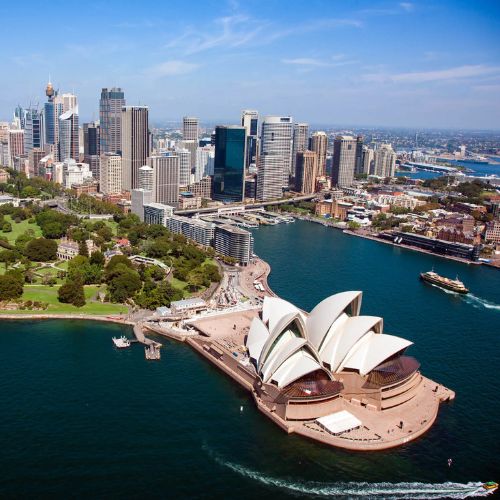
Australia is home to prestigious universities like the University of Melbourne, Australian National University (ANU), and University of Sydney. These institutions consistently rank among the world’s best, offering high-quality education in various fields.
Australian universities are known for their student-centered learning, with a focus on practical skills, research, and critical thinking.
Australia’s multicultural society means you’ll be studying alongside students from all around the world, making it an exciting environment to learn and grow.
With the Temporary Graduate visa, international students can stay in Australia for up to two years after graduation to gain valuable work experience, boosting their global employability.
Compared to other popular study destinations like the USA and the UK, studying in Australia offers more competitive tuition fees and living expenses.
| Feature | Details |
|---|---|
| Reputed Universities | Institutions like the University of Melbourne, ANU, and University of Sydney. |
| Innovative Teaching | Emphasis on research and hands-on learning experiences. |
| Cultural Diversity | A rich mix of cultures enhancing the educational experience. |
| Post-study Work Options | Opportunities to work in Australia for up to 2-4 years post-graduation. |
| Affordability | Tuition fees range from AUD 20,000 to AUD 45,000 annually depending on the program. |
To study in Australia, it’s essential to grasp its education system, which offers various qualifications divided into undergraduate and postgraduate degrees.
Australia’s education system is known for its flexibility and the wide range of study options available to international students. Whether you’re looking for undergraduate, postgraduate, or research-based degrees, Australian universities offer an array of programs tailored to meet diverse academic and career goals.
| Degree Type | Duration | Common Fields |
|---|---|---|
| Bachelor of Arts (BA) | 3 years | Humanities, Social Sciences |
| Bachelor of Science (B.Sc.) | 3 years | Biology, Chemistry, Mathematics |
| Bachelor of Business (B.Bus) | 3 years | Business Administration, Marketing |
| Bachelor of Engineering (B.Eng.) | 4 years | Civil, Mechanical, Electrical Engineering |
| Bachelor of Nursing (BN) | 3 years | General Nursing |
Postgraduate degrees provide specialized knowledge in specific areas after completing an undergraduate qualification.
| Degree Type | Duration | Common Fields |
|---|---|---|
| Master of Arts (MA) | 1-2 years | Humanities, Social Sciences |
| Master of Science (M.Sc.) | 1-2 years | Environmental Science, IT |
| Master of Business Administration (MBA) | 1-2 years | Business Management |
| Master of Engineering (M.Eng.) | 1-2 years | Various Engineering Disciplines |
| Master of Public Health (MPH) | 1-2 years | Health Policy, Epidemiology |
Australia’s education credit system is based on academic credits where one credit equals approximately 10 hours of study. Each degree has specific credit requirements that students must fulfill.
Obtaining an Australia study visa is essential for Indian students aiming to pursue education abroad. The Australian government has recently announced a cap on international student enrolments to address rising migration levels, limiting intake to approximately 270,000 students for 2025.
Australia offers a post-study work visa that allows graduates to work in the country for up to two to four years, depending on the qualification. This provides valuable work experience in the Australian job market.
International students can apply for a Temporary Graduate visa (subclass 485), allowing them to stay in Australia for up to two years after graduation to gain work experience.
To qualify for a student visa, applicants must meet certain criteria:
According to QS World University Rankings 2025, the following are among the top-ranking universities in the Australia:
| Rank | University Name | Annual Fee (AUD) | Acceptance Rate (%) | Notable Alumni |
|---|---|---|---|---|
| 1 | University of Melbourne | 30,000 – 45,000 | 70% | Julia Gillard |
| 2 | Australian National University | 30,000 – 40,000 | 50% | John Howard |
| 3 | University of Sydney | 30,000 – 45,000 | 65% | Tony Abbott |
| 4 | Monash University | 30,000 – 40,000 | 50% | Malcolm Turnbull |
| 5 | University of Queensland | 30,000 – 40,000 | 60% | Peter Beattie |
| 6 | UNSW Sydney | 30,000 – 45,000 | 50% | Scott Morrison |
| 7 | University of Adelaide | 30,000 – 40,000 | 60% | Kevin Rudd |
| 8 | The University of Western Australia | 30,000 – 40,000 | 55% | Geoffrey Blainey |
| 9 | University of Technology Sydney | 30,000 – 40,000 | 65% | David Campbell |
| 10 | Macquarie University | 30,000 – 40,000 | 70% | Alan Joyce |
Public universities are government-funded and typically larger than private institutions which are privately funded and often specialize in specific fields.
The Australia diverse education system excels across various disciplines with promising career prospects:
| Course Name | Duration |
|---|---|
| Computer Science | 3 years |
| Business Administration | 3 years |
| Engineering | 4 years |
| Healthcare/Nursing | 3 years |
| Data Science/Analytics | 1-2 years |
Living expenses vary based on lifestyle choices but generally range from AUD 15,000 – AUD 20,000 annually for international students.
| Expense | Annual Cost (AUD) |
|---|---|
| Accommodation | 10,000 – 15,000 |
| Food | 3,000 – 5,000 |
| Transport | 1,000 – 2,000 |
| Miscellaneous | 3,000 – 5,000 |
Tuition fees vary widely based on the institution and program chosen. Scholarships are available for international students based on merit or need-based criteria.
In summary, studying in Australia offers numerous benefits including access to reputed universities and diverse cultural experiences while providing ample opportunities for post-study work despite recent changes in immigration policies affecting international students.
Yes, Australia is one of the most preferred study abroad destinations for Indian students because of its globally ranked universities, high-quality education system, multicultural environment, strong post-study career opportunities, and student-friendly visa policies.
Most Australian universities require academic transcripts, a valid passport, English language proficiency test scores (IELTS, PTE, or TOEFL), a Statement of Purpose (SOP), and supporting documents. Specific admission requirements vary depending on the university and course.
The total cost depends on the university, course, and city. Students should budget for tuition fees, accommodation, food, transportation, health insurance, and personal expenses while studying in Australia.
Some of the most popular universities include:
These institutions are known for academic excellence, research opportunities, and strong graduate employability.
Yes, some universities may accept alternative English proficiency tests such as PTE Academic, TOEFL iBT, Duolingo English Test (where accepted), or proof of previous education in English. Requirements vary by institution and course.
Yes, international students are generally allowed to work part-time during their studies and full-time during approved academic breaks, subject to current visa conditions. This helps students gain work experience and support their living expenses.
Students must demonstrate sufficient financial capacity to cover tuition fees, living expenses, travel costs, and other study-related expenses. The exact amount depends on current visa requirements and individual circumstances.
Popular courses among international students include:
Australian universities and government bodies offer various merit-based and need-based scholarships. These may cover tuition fees, living expenses, research funding, or partial financial assistance for eligible students.
Student visa processing times vary based on application completeness, document verification, course type, and immigration workload. Applying well before the intake deadline is recommended.
Australian universities typically offer multiple intakes throughout the year. The main intakes are usually February and July, while some universities also provide additional intake options for selected programs.
Australia is considered one of the safest countries for international students. Universities provide dedicated student support services, campus security, mental health resources, and academic assistance programs.
Living expenses vary by city and lifestyle. Major cities such as Sydney and Melbourne generally have higher living costs, while cities like Adelaide, Perth, Hobart, and Canberra may offer more affordable student living options.
Studying in Australia can create pathways toward skilled migration and long-term career opportunities. Eligibility for permanent residency depends on factors such as occupation demand, work experience, qualifications, age, and immigration policies.
Popular student cities include:
The best city depends on factors such as university choice, career goals, cost of living, climate, and lifestyle preferences.
Eligible international students may be able to include their spouse and dependent children in their visa application, subject to current immigration rules and financial requirements.
Students can choose from:
The best option depends on budget, location, and personal preferences.
Yes. Australia offers industry-focused education, internships, practical learning, global networking opportunities, and strong connections between universities and employers, making it attractive for long-term career development.
The required IELTS score depends on the university and course. Most undergraduate and postgraduate programs typically require an overall score ranging from 6.0 to 7.0, though requirements may vary.
Flying Chalks Overseas assists students with university selection, application processing, SOP guidance, scholarship assistance, education loan support, visa documentation, pre-departure guidance, and overall study abroad counselling for Australia.
Copyright © 2025 Flying Chalks Overseas | All Rights Reserved
WhatsApp us